
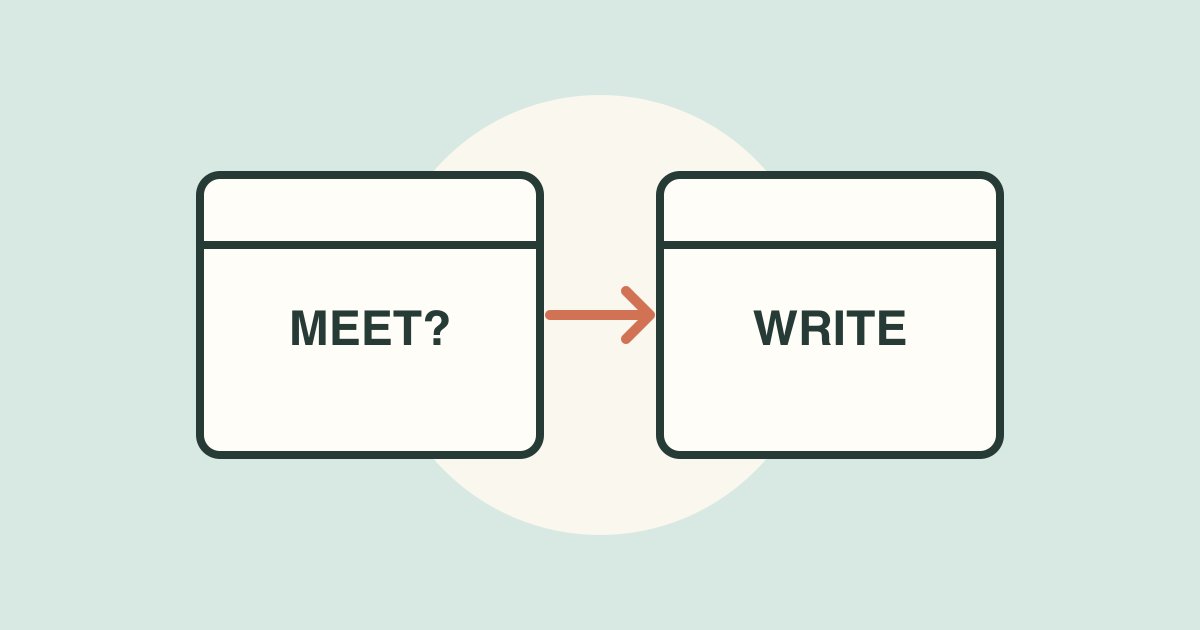
A meeting is a good choice when people need to respond to one another in real time to make progress. If they can read an update or give independent input by a clear deadline, start in writing. If the decision owner or essential information is missing, prepare before choosing a slot.
The calendar invite is very persuasive. It offers a button, a room, and the comforting feeling that something is happening. Try these questions before accepting its generous offer.
A five-question meeting decision checklist
- What needs to happen? Name the outcome: “Choose a vendor by Friday” is more useful than “vendor sync.” If you cannot name it, clarify the ask first.
- What would live interaction change? A negotiation, sensitive conversation, or real-time coordination may need it. A status update usually does not.
- Can people contribute independently? Send the context, a specific question, an owner, and a response deadline. Multiple opinions alone do not require a call.
- Are the necessary people and materials ready? If the person who can decide is unavailable or the options do not exist yet, prepare first.
- What happens if this waits? An urgent incident may need immediate coordination. A near deadline alone does not turn a one-way announcement into a discussion.
Use judgment: a one-on-one for feedback or trust can be valuable even if there is no neat deliverable. A useful conversation is an outcome, too.
Further reading: George Washington University: Should We Have a Meeting? decision tree · Google re:Work: Hold effective one-on-one meetings
Three examples, three different next steps
- Weekly launch update: The dates are settled and the team needs to know what changed. Post the update, identify blockers, and give readers a way to raise them.
- Competing launch dates: Two teams have incompatible constraints and the decision owner needs to weigh the trade-offs with them. Share the options first, then meet with the people needed to choose.
- Vendor selection without quotes: The group needs to decide, but pricing is still missing. Assign someone to get comparable quotes before scheduling the decision.
Give the written option a proper handoff
A message saying “thoughts?” is not a replacement for a meeting; it is a small mystery assigned to several people. Say what input you need, who will decide, and when. If the replies expose a disagreement that needs live discussion, meet with the people involved and share the outcome afterward.
Decision: Which vendor should we trial? Please flag security or implementation risks in the comparison by Wednesday at noon. Maya will decide Thursday and post the choice in this document.
Still unsure? Describe the outcome, people, deadline, and context in the assessment below. It can ask a follow-up when a missing detail could change the recommendation.
For a meeting that already happens, try the Meeting Auditor to review how well it works.